Written by: Heather Hutchings, The Convive Collective
If you work in social or environmental change, you already know: change doesn’t happen in a vacuum.
Our actions, decisions, collaborations, and even our frustrations shape, and are shaped by, the systems we’re part of. Systems thinking isn’t an abstract academic exercise; it’s the water we swim in every day.
At Convive, we see systems learning as the practice that helps us surface invisible currents that shape change. It nudges us to zoom out, connect dots, and understand how our work interacts with (and sometimes runs up against) the deep patterns holding problems in place and the possibilities to unlock them. It’s a way of learning that rewards curiosity, humility, and collective intelligence.
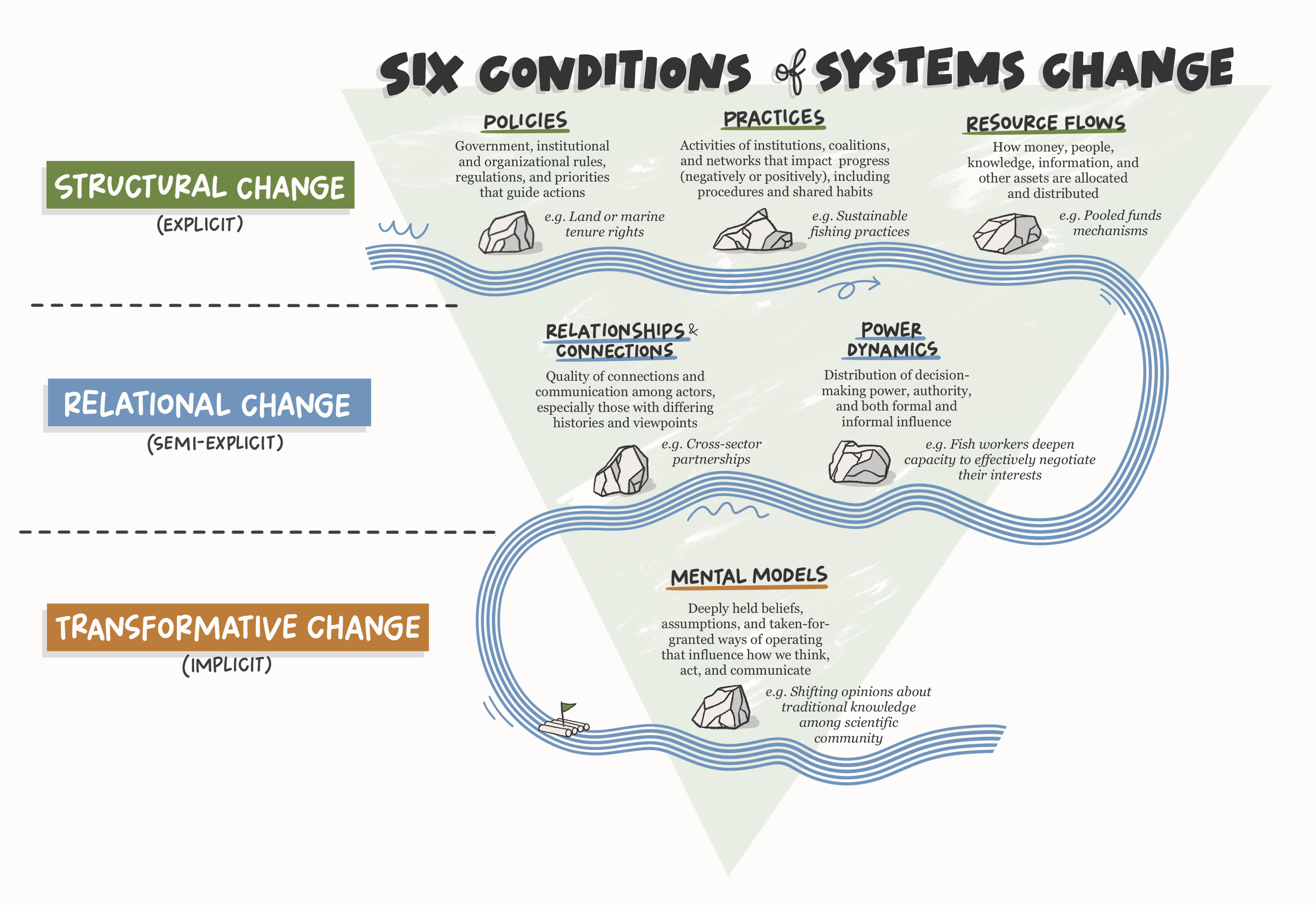
In our work, we often draw on practical tools that help make systems change more tangible. One that’s been particularly useful is UNDP’s MEL 360 Guidance for Systems Change, which offers a simple way to locate our work within a wider system and think clearly about the kinds of change we’re contributing to.
At its core is a set of six interrelated conditions that shape how social and environmental problems persist and shift, from mental models and relationships to policies and practices. Rather than treating “systems change” as a catch-all ambition, this lens helps us be more precise about where and how change might happen.
Recently, we used this lens with a climate philanthropy to explore the systems change potential of their funded portfolio.
Together, we:
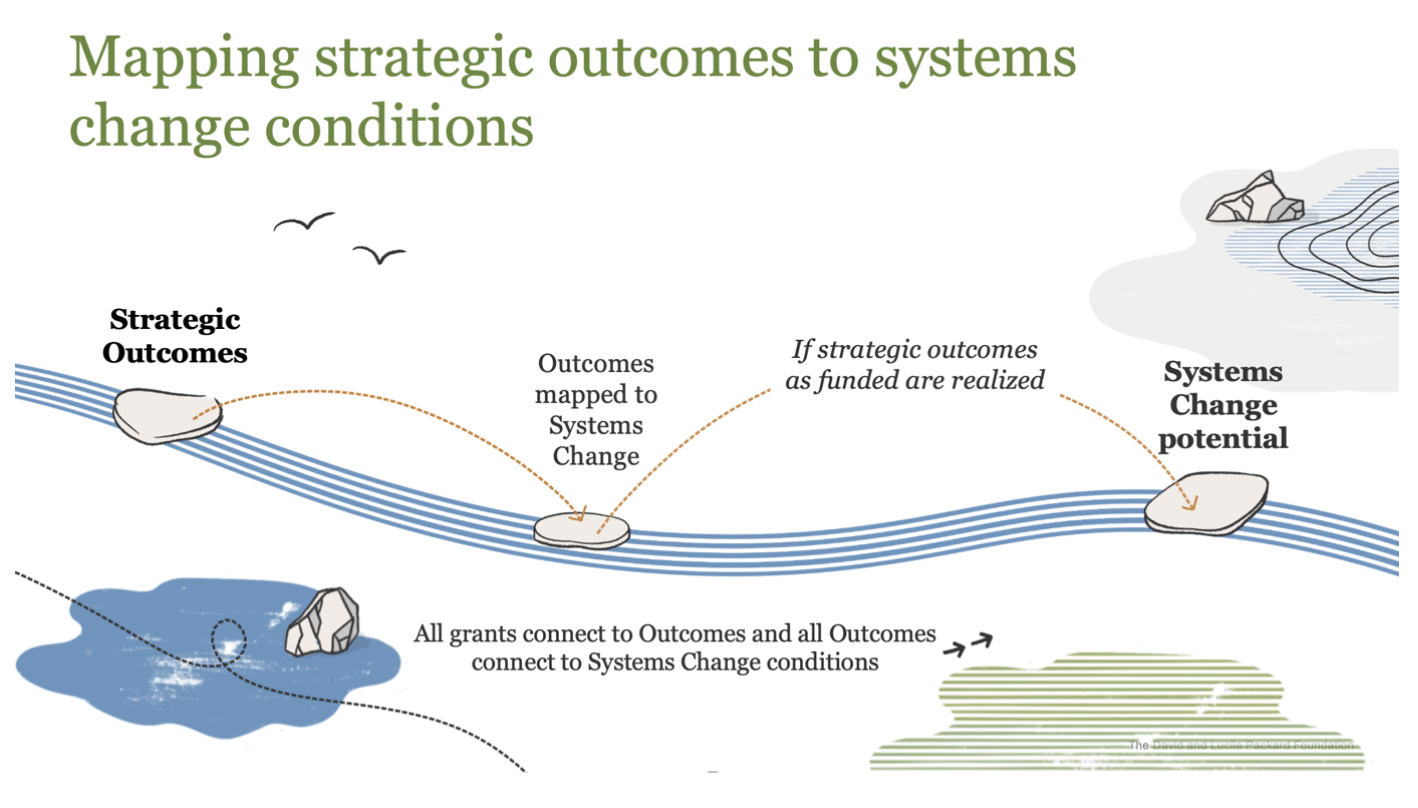
1. Mapped the foundation’s strategic outcomes to the six conditions, identifying which condition(s) each outcome, if realized, would influence.
2. Created a heatmap showing how their current portfolio may influence the conditions of systems change if strategic outcomes are realized.
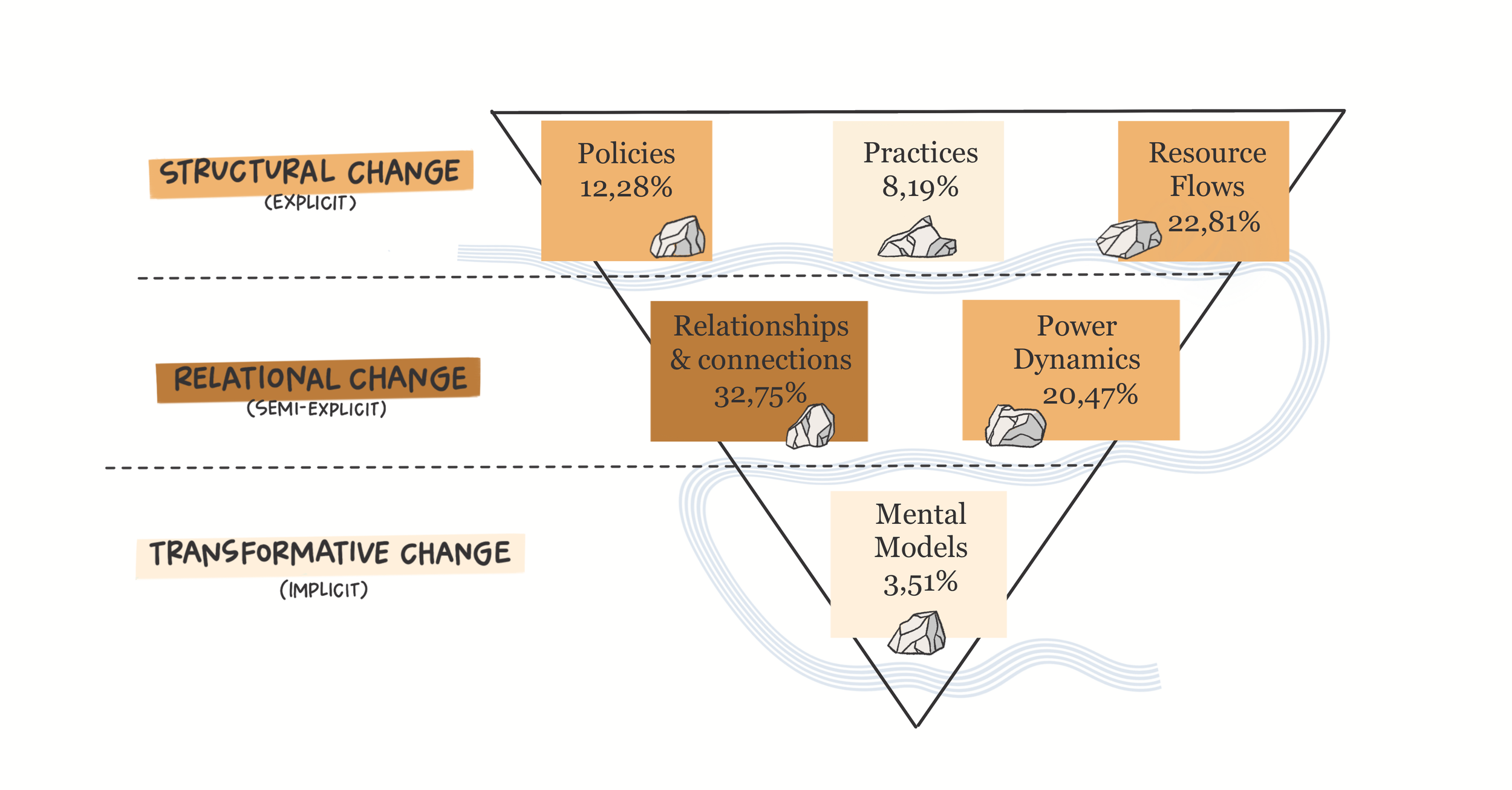
The goal wasn’t to engineer an equal distribution across the conditions or push funding toward underrepresented conditions. Rather, the heatmap visual is a learning tool, prompting reflection:
Is this the picture of change we want to influence?
Does this reflect where we add the most value within the wider system?
In this case, the exercise helped surface where the foundation was already contributing to systemic shifts and where collaboration with others would be essential.
Although there is no hierarchy within the conditions, systemic shifts are more likely to be sustained when we work—in collaboration with partners and peers—at multiple different levels and domains. The ‘right’ emphasis across the six conditions depends on where you sit in the system, the influence you have, and the resources you can bring to the table.
This client is bravely dipping their toe in the waters of systems learning. A next step may be extending the system's lens from strategic outcomes (what could happen) to monitoring and impact assessment (what actually is happening). Surfacing whether real-world shifts align with the anticipated system change potential or reveal a different, perhaps surprising, pattern.
Systems change rarely unfolds in a straight line. Tracking the six conditions gives us multiple windows into how the system may be shifting and helps us embrace the beautifully messy, non-linear pathways systems transformation often takes.
Ready to Take the Plunge?
Whether you’ve been swimming in the waters of systems change for years or you’re just dipping your toe in, systems learning offers an opportunity to deepen your impact, sharpen your strategy, and stay grounded in the dynamic realities of the world you’re working to change.
Convive would love to learn with you. If you're exploring how to bring systems learning into your work, or strengthen the enabling conditions that make it flourish, do reach out. Let’s navigate the waters together!
📬 Sign up for our newsletter below for updates, resources, and insights.