
Written by: Kari Jorgensen Diener, CEO of Blue Ridge Area Food Bank, and Heather Hutchings, The Convive Collective
“We want everyone to see themselves in the strategy: our office and warehouse staff, our guests, partners, and volunteers”.
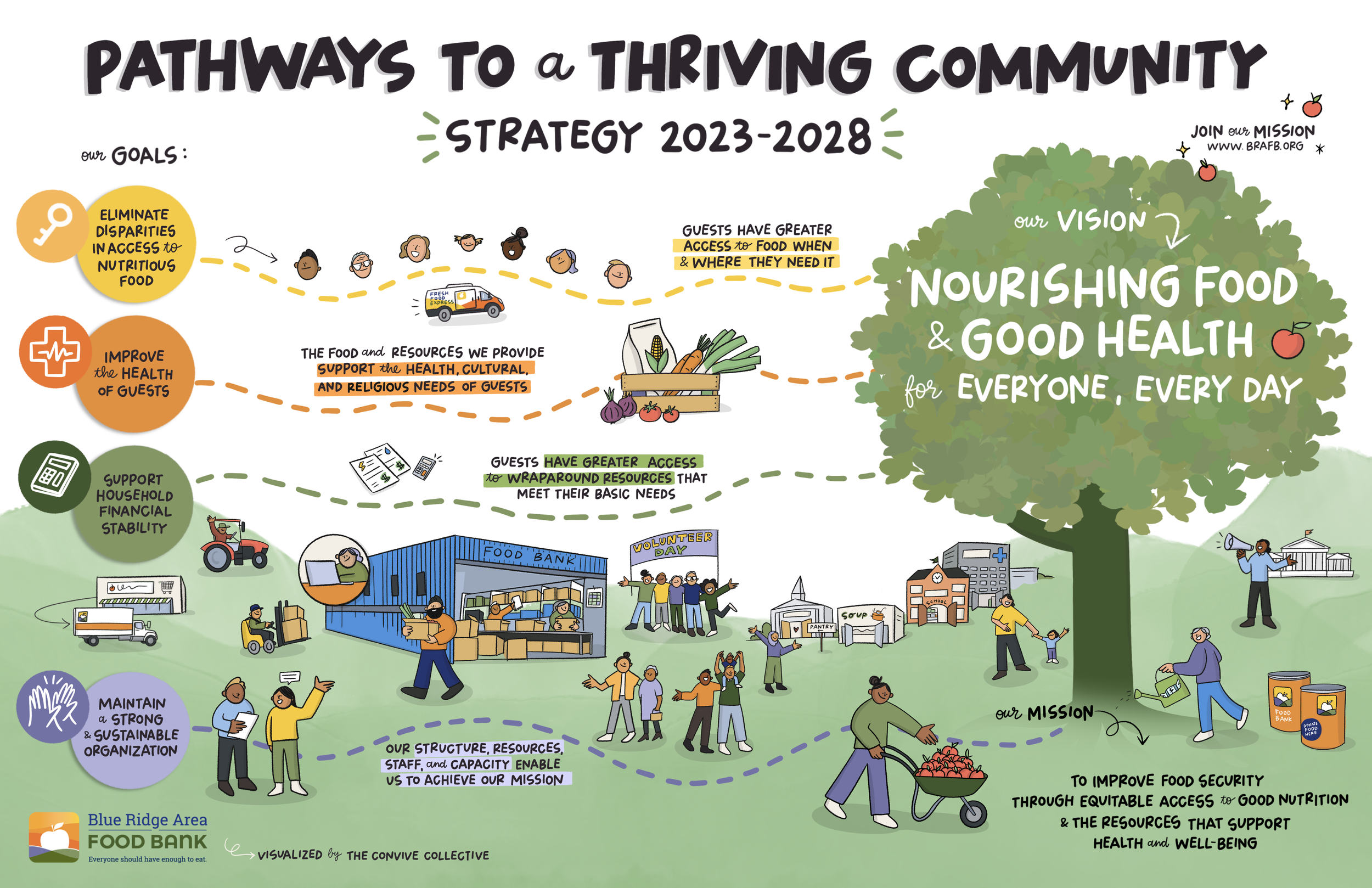
This was the ambition for a recent partnership between The Convive Collective and Blue Ridge Area Food Bank to transform ten pages of thoughtful strategic planning into a dynamic and accessible visual.
When a strategy is embedded in a ten-page paper, it is challenging to bring it to life. By visualizing it, we aren't just making a pretty picture; we’re creating a shared language that allows every delivery driver, donor, and pantry leader to see how they make a difference.
To give ourselves an extra challenge, like the game of Taboo, we forbid technical language – words like ‘theory of change’, ‘objectives’, ‘strategic plan’ had to be explained in plain language which is, let’s be honest, how we all prefer to receive information.
How did we do?
Read on to find out how we did it!
Getting to the heart of the matter
Our first step was to simplify how the strategic plan is presented, drawing clear distinctions and lines between the activities, outcomes, indicators of success, and strategic goals. Essentially crafting a theory of change (Taboo!) – or making clear how the Food Bank believes that change will happen (better!).
While the written plan necessarily and beautifully captured the complexity of interconnections between the strategic pathways, and the interplay with the external context, we agreed that the visual needed to communicate clarity more than complexity.
But simple is not easy! We were so inspired by the Food Bank team’s courage to strip away the complexity and get to the heart of the matter. The team worked hard to make the strategy’s logic clear and explicit, and to select just one key outcome by which the success of each strategic goal could be measured.
The Path to a Thriving Community
We love a metaphor for shared language. Inspired by the rural terrain of central and western Virginia, we visualised the strategic goals as foot paths to the Food Bank’s vision of a thriving community, set against the backdrop of the Blue Ridge mountain range.
By mapping the community and all the contributors to the Food Bank’s mission, we made sure to visually represent every role from farmers to forklift drivers, families to Food Bank volunteers, making clear that everyone has a place on the pathway to change.
People had a lot of fun finding themselves when the visual was launched!
From Breakrooms to the Board Rooms: Bringing the Strategy to Life
We expanded the visual strategy into a slide deck with more detail for each pathway as illustrated below. The Blue Ridge Area Food Bank has used this to help the board and new staff members understand how the Food Bank works to make change happen.
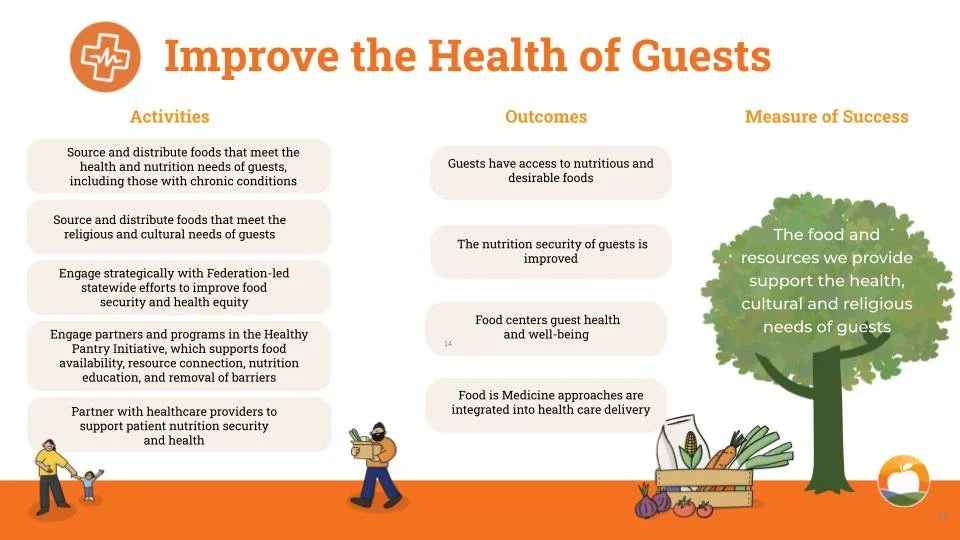
Printed copies of the visual are displayed in volunteer break rooms. And the graphics will illustrate the Food Bank’s next annual report.
We had fun brainstorming other creative ways that the Food Bank might use the visual strategy – so far we’ve come up with:
Making it into an animation with a voice-over explanation
Creating a physical poster or virtual whiteboard for people to add post-it notes of achievements for an interactive impact assessment or questions to build a learning plan
Printing small postcards for mailing to supporters
Transforming it into a colouring page for kids - we love this idea!
We love hearing how others are breaking the rules of ‘traditional’ strategic planning. How are you creating a strategy that everyone can see themselves in?