
Written by: Katherine Haugh, The Convive Collective
A simple framework for interrupting our biases at every stage of learning.
Here's something that's both fascinating and deeply human. We don't experience reality objectively. We notice the evidence that stands out. We interpret it through our existing beliefs. We share the perspectives that make the most sense to us. And we build systems that reinforce what we already think is true.
None of this is intentional. It's simply how our brains work.
Which means one of the most important questions we can ask isn't: "How do we gather more evidence?" It's: "How do we make sure we're seeing the evidence we're naturally inclined to overlook?"
One of my favourite ways to think about this is through the 4I Framework of organizational learning. It suggests that learning tends to move through four stages.
First, we intuit—we notice patterns, signals, and possibilities. This happens instantaneously, almost without thinking.
Then we interpret—we begin making sense of what those patterns mean (as individuals).
Next, we integrate—we discuss our interpretations with others and build a shared understanding (as a group); this is otherwise known as “sensemaking.”
Finally, we institutionalize—we embed what we've learned into our decisions, processes, and ways of working.
The challenge? Each of these stages comes with its own predictable blind spots.
The good news? Each one can also be strengthened with one simple question.
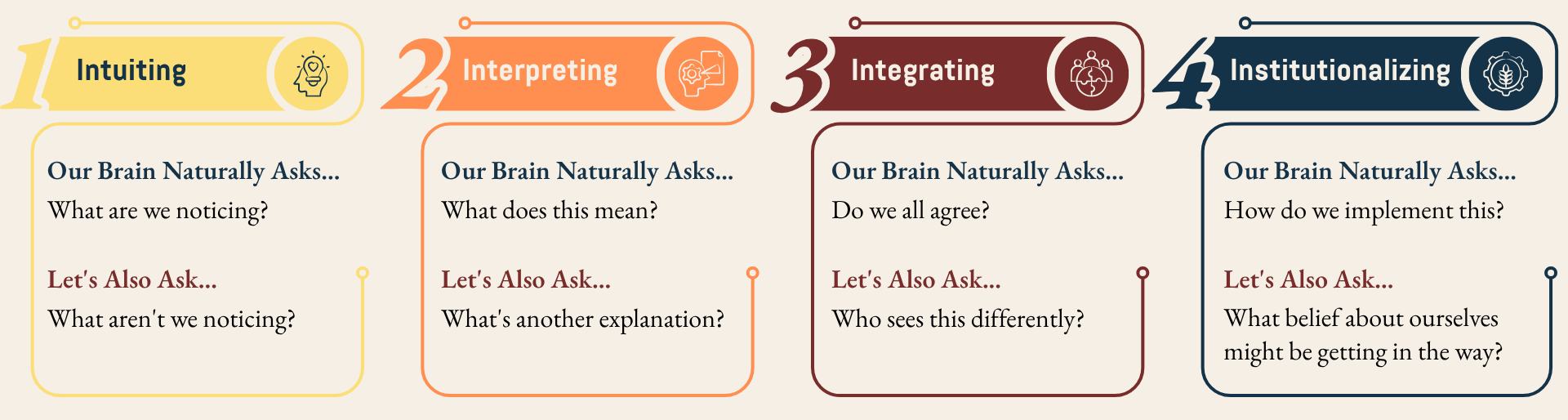
These questions are easy to ask ourselves. They're even more powerful when someone else asks them.
At Convive, we've started thinking about these questions as moments of productive cognitive friction. Not friction for the sake of disagreement. Friction that stretches our thinking before we make a decision.
Sometimes we create it through an Evidence Debate. Sometimes it's an S-Files investigation. Sometimes it's through a creative scavenger hunt.
Sometimes it's simply asking: "What evidence would convince us we're wrong?"
Because the goal isn't to prove ourselves wrong. It's to make sure we're seeing as much of reality as possible.